
Loading…
Field guides / Gilgit Division / Nagar / Spantik (Golden Peak)
Field guide · Mountains
Gilgit Division
Nagar District · Gilgit-Baltistan, Pakistan
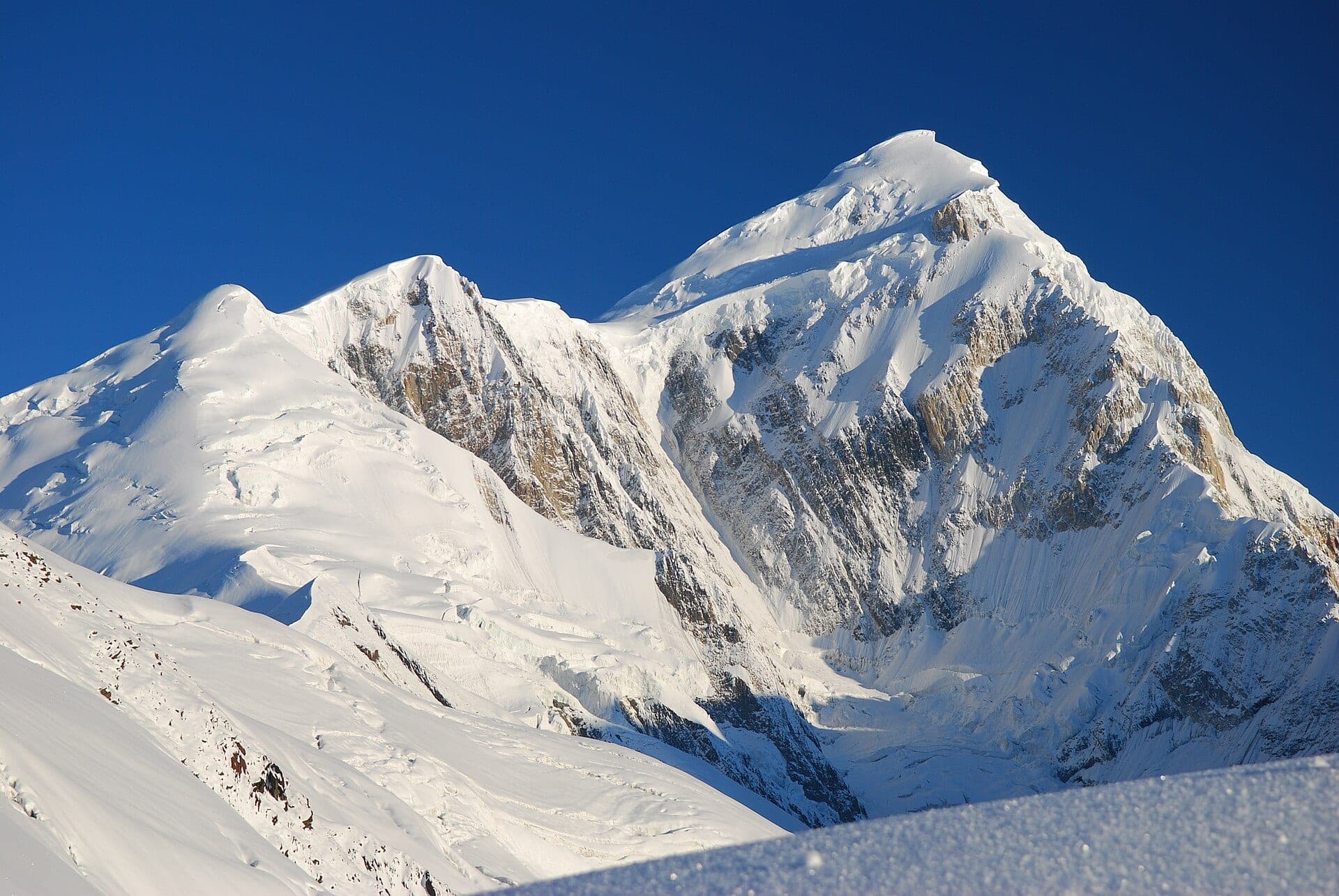
At 7,027 m known as Golden Peak for its glowing granite face, approached via Snow Lake and considered an ideal high-altitude trekking and acclimatisation climb.
Spantik, also called Golden Peak for the warm granite glow of its south face at sunset, stands at 7,027 m in the Nagar District. Approached via the Snow Lake glacier system, it is regarded as one of the most beautiful and technically rewarding peaks in the 7,000 m range. The south pillar route, first climbed by the British team of Mick Fowler and Victor Saunders in 1987, is considered a modern classic.
Why go
Spantik's south face catches evening light in a way that turns the granite amber and gold, the source of the Golden Peak name. The mountain sits above the Snow Lake icefield, one of the largest glaciated areas outside polar regions.
Planning tip
Best Time to Visit, June to August for climbing; Snow Lake crossing requires the full summer window.
Getting there, Access via Nagar and Hispar Valley, the Hispar Glacier walk to Snow Lake takes 5-7 days. Alternatively, approached from the Chogo Lungma Glacier on the Baltistan side.
Allow, 8-12 days to reach base camp; 5-7 weeks for full expedition.
Straight-line distance from Spantik (Golden Peak), within 30 km.